Crypto Exchanges With Lowest Fees Compared in 2026
I've spent years trading cryptocurrencies and testing different exchanges. The fees can make or break your profits.
Here's my comparison of exchanges with the lowest fees, based on my experience.
BYDFi – Low Fees for Futures Traders
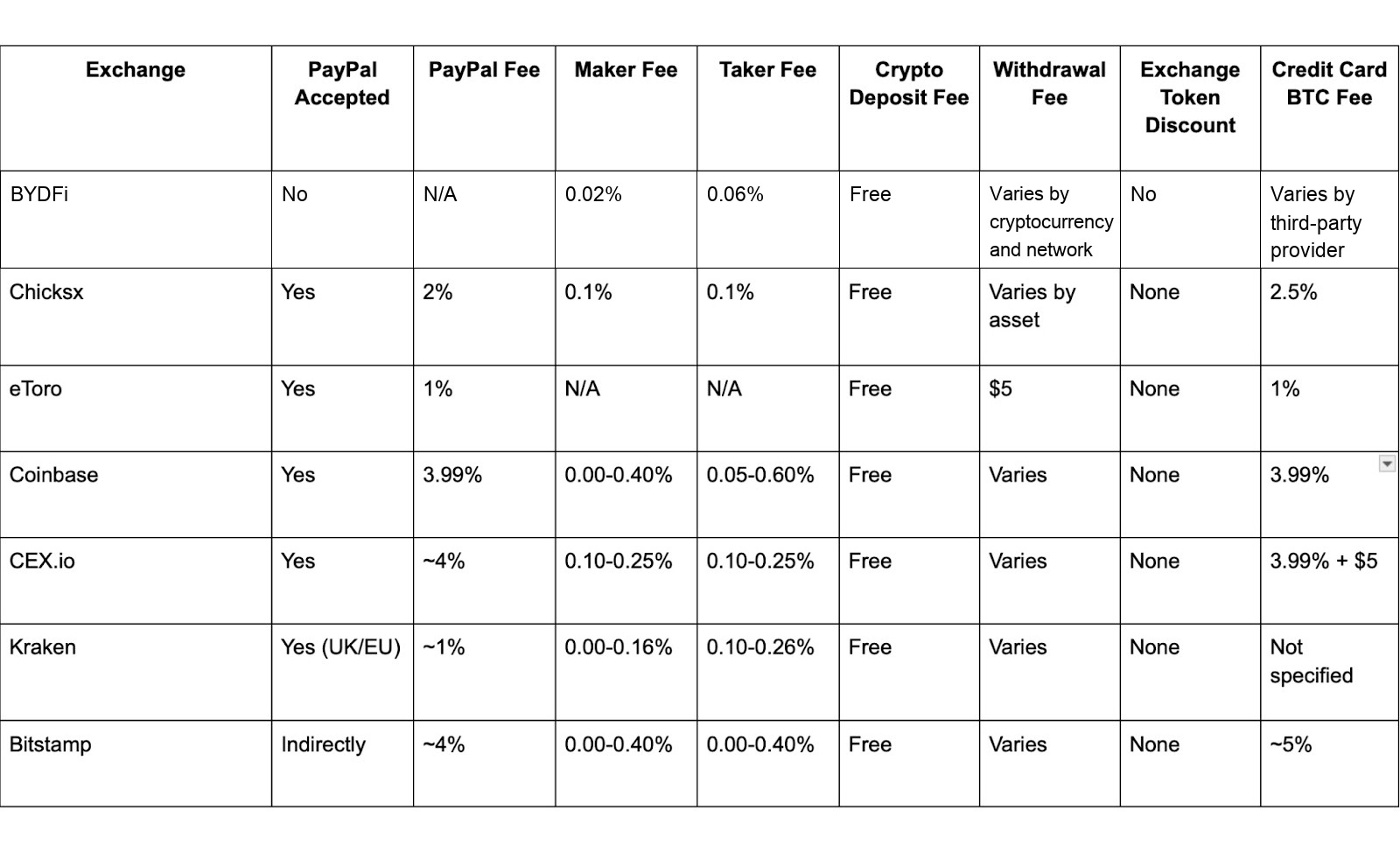
BYDFi offers a straightforward fee structure, charging 0.1% for both maker and taker orders in spot trading. For perpetual futures, standard fees start at 0.02% for makers and 0.06% for takers, making the platform particularly competitive for active derivatives traders.
The exchange also provides perpetual futures with up to 200x leverage, automated trading bots, copy trading, and demo trading. Basic trading is available without mandatory KYC, making it easier for users to start trading quickly.
ChicksX - My Top Choice
ChicksX wins my top spot for lowest overall fees. The exchange charges 0.1% for both maker and taker fees. This flat rate beats most competitors. PayPal deposits cost 2%, which is low. Credit card purchases cost 2.5%.
ChicksX keeps things simple. No tier systems exist. No token holdings required. Every trader gets the same low fees. The platform accepts PayPal globally. Crypto deposits are free. Withdrawal fees match network costs.
Security remains strong at ChicksX. The exchange uses cold storage. Two-factor authentication protects accounts. Insurance covers user funds. Customer support responds quickly.
eToro - Simple But Limited
eToro charges 1% for PayPal deposits. The platform doesn't use traditional maker/taker fee structures. Instead, eToro builds fees into spreads. This makes cost calculations difficult.
Credit card BTC purchases cost 4%. Withdrawals cost a flat $5. The platform focuses on beginners. Advanced traders might find features limited.
eToro offers social trading features. Users can copy successful traders. The interface stays user-friendly. Mobile apps work well.
Coinbase - Popular But Expensive
Coinbase charges high fees for beginners. PayPal deposits cost 3.99%. Credit card purchases also cost 3.99%. Maker fees range from 0.00% to 0.40%. Taker fees range from 0.05% to 0.60%.
Coinbase Pro offers lower fees. High-volume traders get better rates. The platform remains popular in the US. Security standards stay high.
The exchange offers educational resources. Earn programs provide free crypto. The mobile app works smoothly. Customer service varies in quality.
CEX.io - High Card Fees
CEX.io charges about 4% for PayPal deposits. Credit card fees reach 3.99% plus $5. Maker fees range from 0.10% to 0.25%. Taker fees match maker fees.
The platform supports multiple payment methods. Fiat deposits work globally. The interface suits beginners. Advanced features exist for pro traders.
CEX.io offers margin trading. Staking options provide passive income. The mobile app functions well. Support responds reasonably fast.
Kraken - Low Fees, Limited PayPal
Kraken offers excellent fee structures. PayPal only works in UK and EU. The fee is about 1%. Maker fees start at 0.00% and reach 0.16%. Taker fees range from 0.10% to 0.26%.
The exchange provides advanced trading features. Futures trading costs less than spot trading. Security measures remain strong. The platform serves professional traders well.
Kraken offers staking services. Margin trading provides leverage options. The interface can confuse beginners. Customer support quality varies.
Bitstamp - Old But Reliable
Bitstamp doesn't accept PayPal directly. Users must use workarounds. These methods cost about 4%. Maker and taker fees range from 0.00% to 0.40%.
Credit card purchases cost about 5%. The platform focuses on security. The exchange has operated since 2011. Few hacks have occurred.
Bitstamp offers institutional services. The API works reliably. Mobile apps function adequately. Support responds slowly sometimes.
Gemini - Secure But Costly
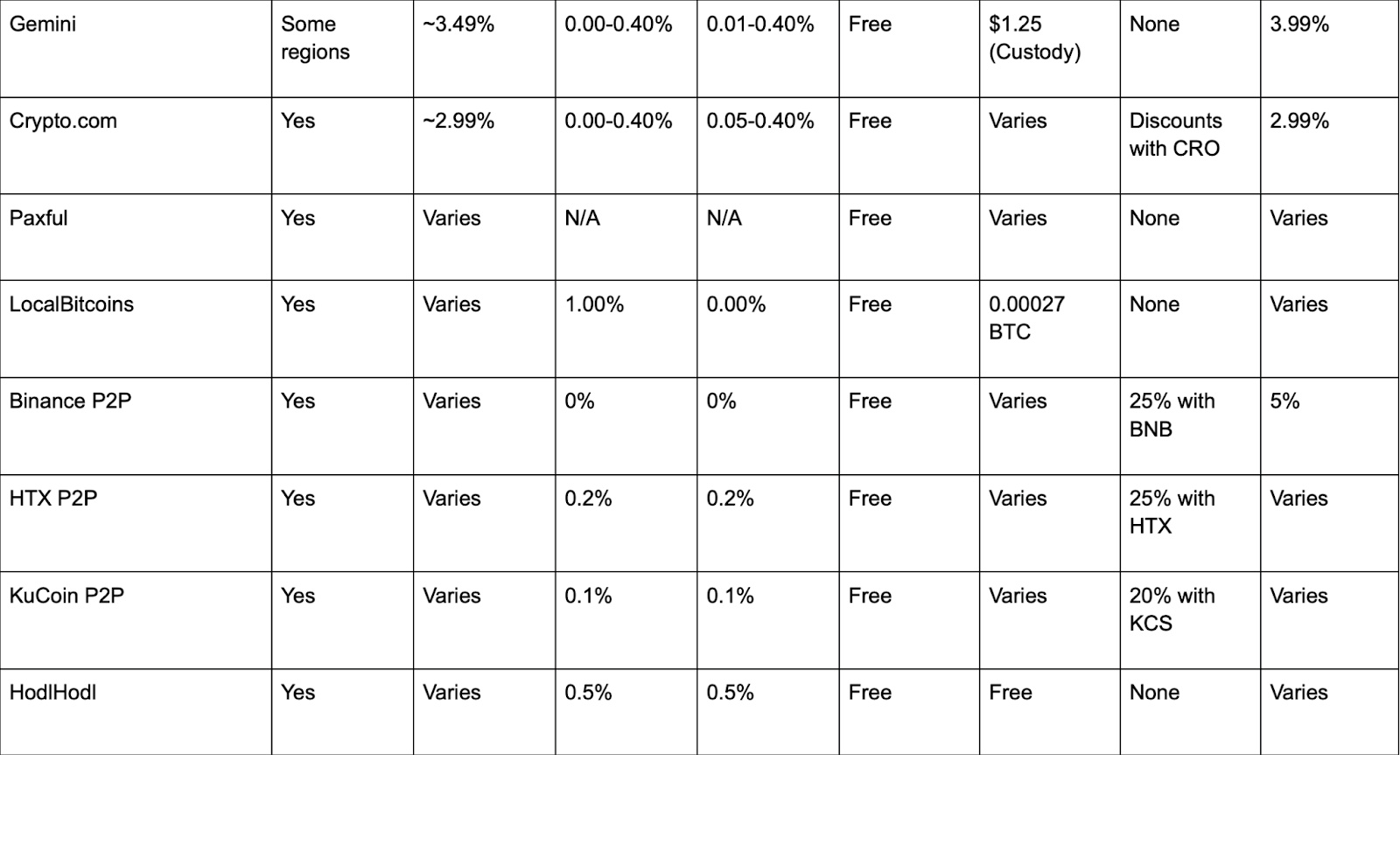
Gemini accepts PayPal in some regions. The fee reaches 3.49%. Maker fees range from 0.00% to 0.40%. Taker fees range from 0.01% to 0.40%.
Credit card fees match Coinbase at 3.99%. Custody withdrawals cost $1.25. The platform emphasizes security. Insurance covers digital assets.
Gemini offers the Gemini dollar stablecoin. ActiveTrader reduces fees for pros. The mobile app works well. Customer service responds promptly.
Crypto.com - Token Benefits
Crypto.com charges 2.99% for PayPal deposits. Credit cards cost the same. Maker fees range from 0.00% to 0.40%. Taker fees range from 0.05% to 0.40%.
CRO token holders get fee discounts. The platform offers many services. These include cards, loans, and staking. The ecosystem continues growing.
The exchange provides DeFi features. NFT marketplace exists. Mobile app dominates desktop version. Support quality varies significantly.
Paxful - P2P Marketplace
Paxful fees vary by seller. PayPal acceptance depends on sellers. No standard maker/taker structure exists. Buyers often pay premiums.
The platform focuses on peer-to-peer trading. Many payment methods work. Escrow protects transactions. Disputes require manual resolution.
Paxful serves unbanked regions well. The interface stays simple. Mobile apps function adequately. Support handles disputes carefully.
LocalBitcoins - Pure P2P
LocalBitcoins charges 1% maker fees. Taker fees are 0%. PayPal availability varies. Sellers set their own prices.
Bitcoin withdrawals cost 0.00027 BTC. The platform pioneered P2P trading. Reputation systems protect users. Escrow secures transactions.
LocalBitcoins faces regulatory pressure. Many countries restrict access. The interface looks dated. Support responds to disputes.
Binance P2P - Zero Trading Fees
Binance P2P charges 0% trading fees. PayPal availability depends on sellers. BNB holdings provide 25% discounts on main exchange. Credit card purchases cost 5%.
The platform connects buyers and sellers directly. Escrow protects funds. Dispute resolution works efficiently. Many payment methods exist.
Binance faces regulatory issues globally. US version has fewer features. The ecosystem remains large. Innovation continues despite challenges.
HTX P2P - Moderate Fees
HTX P2P charges 0.2% for both maker and taker fees. PayPal acceptance varies. HTX token provides 25% fee discounts. Credit card fees vary.
The exchange formerly operated as Huobi. Rebranding occurred recently. P2P trading works smoothly. Multiple fiat currencies supported.
HTX offers futures trading. Staking options exist. The interface suits experienced traders. Mobile apps function well.
KuCoin P2P - Competitive Rates
KuCoin P2P charges 0.1% for all trades. PayPal availability depends on merchants. KCS token provides 20% fee discounts. Credit card fees vary.
The platform offers many altcoins. Futures trading costs less than spot. Margin trading provides leverage. Bot trading works well.
KuCoin faced security issues previously. Recovery happened quickly. The interface can overwhelm beginners. Advanced features attract pros.
HodlHodl - Non-Custodial P2P
HodlHodl charges 0.5% for all trades. PayPal acceptance varies by offer. No exchange token exists. Withdrawals are free.
The platform never holds user funds. Multi-signature contracts secure trades. Privacy remains high. KYC isn't required.
HodlHodl offers lending services. The interface stays minimal. Technical knowledge helps. Support assists with contracts.
Why ChicksX Beats the Competition
ChicksX combines low fees with excellent service. The 0.1% flat rate beats tiered systems. PayPal integration works globally at 2%. Credit card fees stay competitive at 2.5%.
No token purchases required. No complex VIP tiers exist. Every user gets the same great rates. This simplicity saves time and money.
Security matches top exchanges. Customer support responds quickly. The platform handles high volumes easily. New features launch regularly.
How Crypto Exchanges Charge You
When you trade crypto, you'll pay different fees.
Let's break them down so you know exactly what you're paying for.
Trading Fees - The Main Cost
You pay trading fees every time you buy or sell crypto.
There are two types:
- Maker fees - When you set a price and wait for someone to match it
- Taker fees - When you buy or sell right away at the current price
Getting Money In and Out
Deposits
- Sending crypto to the exchange? Usually free
- Sending regular money? Banks are cheaper than credit cards
- Card deposits can get expensive
Withdrawals
- Bitcoin costs more to withdraw because the network is busier
- Some exchanges charge the same fee every time
- Others change their fees based on how busy the network is
- ChicksX matches their fees to what the network actually costs
Currency Exchange Fees
When you swap dollars for euros (or any currencies), you'll pay fees. These often hide in the exchange rate. International transfers? Even more fees.
Futures Trading
Trading futures has its own costs:
- Maker and taker fees for opening and closing trades
- Funding rates - money paid between traders with different positions
- Some exchanges make futures cheaper than regular trading
Watch Out For These Fees
Inactivity Fees
Haven't traded in a while? Some exchanges charge you for that. Keep a minimum balance and you might avoid these fees.
Exchange Tokens
Some exchanges give discounts if you hold their tokens:
- Binance: 25% off if you hold BNB
- KuCoin: 20% off with KCS
- ChicksX keeps fees low without needing tokens
Volume Discounts
Trade more, pay less. Your fees go down as you trade bigger amounts each month.
Transfer Fees
Moving crypto between your wallets on the same exchange? Free. Moving to another exchange? You'll pay network fees.
Hidden Costs
- Market orders might cost more than you expect
- The gap between buy and sell prices adds to your costs
Margin Trading
Borrowing money to trade? You'll pay interest. Get liquidated? More fees.
API Trading
Using automated trading? Fees might be different. Some exchanges charge extra for API access.
The key is knowing what you're paying for. Every exchange charges differently, so check the fees before you trade.
Here's How Fees Work When You Trade Crypto
When you place an order that sits and waits for someone else to trade with you, you're adding to the market. Exchanges like this, so they charge you less. These are called maker fees.
But if you want to trade right now and grab someone else's order, you pay more. That's a taker fee. It happens when you use market orders or when your limit order fills immediately.
The more you trade each month, the less you pay. It's like a loyalty program - trade more, save more. This really helps if you trade a lot.
Some exchanges have VIP clubs. You need to trade huge amounts or keep lots of money on the exchange. In return, you get cheaper fees, faster support, and special perks.
Buying crypto with dollars costs more than trading one crypto for another. Why? Because banks and payment companies take their cut, and there's extra paperwork for handling regular money.
You can save money by holding the exchange's own coin. Like on Binance - if you hold BNB, you save 25% on fees. But these discounts usually get smaller over time.
And here's something cool - some exchanges actually pay you to place waiting orders. They give you a tiny rebate instead of charging a fee. Day traders love this.
Security Considerations for Low-Fee Exchanges
You want low fees, but not if it means your money isn't safe. Good exchanges spend money on security even when they charge less.
Most of your crypto sits in cold storage - that's offline, where hackers can't reach it. It's like keeping cash in a vault instead of the register.
Two-factor authentication stops people from breaking into your account. Hardware keys work best - they're physical devices you need to log in. And while text message codes are common, they're not as safe because someone could hijack your phone number.
Some exchanges have insurance in case something goes wrong. If they get hacked or someone steals funds, the insurance might cover your losses. But every exchange is different - some cover more than others.
These platforms also get checked regularly for weak spots. Outside security companies come in and test everything. They even try to hack the system themselves to find problems before real hackers do.
It's like having both good locks on your doors and someone who regularly checks if those locks still work properly.
Tax Implications of Exchange Fees
Trading fees actually help lower your taxes. When you buy crypto, the fees you pay get added to your purchase price. When you sell, fees come off your selling price. This means less profit on paper, so you pay less tax.
The IRS sees fees as part of what you paid for your crypto. So if you bought Bitcoin for $10,000 and paid $100 in fees, your cost is really $10,100. That's good news when it's time to calculate your gains.
Gas fees work the same way. When you buy tokens on Ethereum, those network fees add to your cost. When you sell, they reduce what you actually received. Just make sure you keep track of everything.
Moving crypto between exchanges? Those withdrawal fees get added to your cost basis too. But if you're withdrawing to sell immediately, the fees reduce your taxable proceeds instead.
Staking is a bit different. When you earn staking rewards, that's taxable income right away. But any fees you pay for staking reduce that taxable amount. And when you unstake, those fees affect your cost basis.
If you trade professionally, you might be able to deduct all these fees as business expenses. But you need to meet specific requirements - most regular investors can't do this.
The good news?
Crypto tax software can handle all these calculations for you. It imports your trades and automatically includes all the fees in your tax reports.
I select crypto exchanges based on specific criteria. Fees matter, but other factors affect the total cost and experience. Here are the key criteria I use to choose low-fee exchanges.
Trading Fees Analysis
Trading fees form the core expense on any exchange. I check maker fees and taker fees for each platform. Maker fees apply to limit orders. Taker fees apply to market orders. ChicksX charges 0.1% for both types, which beats most competitors.
I calculate total trading costs for my typical monthly volume. A 0.1% difference in fees saves significant money over time. High-frequency traders benefit most from lower fees. Casual traders still save money with better rates.
Supported Cryptocurrencies
The exchange must offer the cryptocurrencies I trade. Bitcoin and Ethereum appear on most platforms. Altcoin selection varies significantly between exchanges.
I verify that my preferred trading pairs exist. Some exchanges offer limited pair options. Cross-trading between altcoins often costs more. Direct trading pairs reduce fees and complexity.
Fiat Currency Support
Fiat deposit and withdrawal options affect total costs. Bank transfers usually cost less than credit cards. PayPal acceptance provides convenience but may increase fees.
I check which fiat currencies the exchange supports. Currency conversion fees can add hidden costs. Local currency support eliminates conversion expenses. Multi-currency accounts help international traders.
Security Measures
Security protects my investments from theft. I verify each exchange uses cold storage for most funds. Hot wallets should contain minimal amounts for daily operations.
Two-factor authentication prevents unauthorized access. I prefer exchanges offering hardware security key support. Email-based 2FA provides basic protection. SMS authentication remains vulnerable to attacks.
Account security includes login notifications and API restrictions. I enable withdrawal address whitelisting when available. Session timeouts prevent unauthorized access. IP address monitoring detects suspicious activity.
Regulatory Compliance
Regulatory compliance ensures legal operation in my jurisdiction. Licensed exchanges face regular audits and inspections. Compliance costs may increase fees slightly.
KYC verification requirements vary by platform and region. I complete identity verification to access full features. Some exchanges offer limited anonymous trading. Regulatory compliance reduces legal risks.
Withdrawal Fees and Limits
Withdrawal fees directly impact profitability. I compare fees for each cryptocurrency I trade. Bitcoin withdrawals typically cost more than altcoins.
Daily and monthly withdrawal limits affect large traders. I verify limits match my trading volume needs. Higher verification tiers often increase withdrawal limits. Some exchanges charge percentage-based withdrawal fees.
User Interface Quality
The interface affects trading efficiency and accuracy. Clean designs reduce costly mistakes. Mobile apps must function reliably for on-the-go trading.
Advanced charting tools help technical analysis. Order types should include stops and limits. API access enables automated trading strategies. Real-time data prevents costly delays.
Customer Support Quality
Customer support resolves issues that could cost money. I test response times before major deposits. Live chat provides fastest problem resolution.
Support quality includes knowledge and problem-solving ability. Multilingual support helps international traders. Ticket systems track issue resolution. Phone support offers immediate assistance for urgent problems.
Fee Discount Programs
Fee discounts reduce trading costs for active users. Volume-based tiers reward frequent traders. Token holding requirements add complexity.
I calculate whether discount programs provide real value. Token price volatility affects discount economics. Some programs require large token investments. Simple fee structures often beat complex discount systems.
Mobile App Functionality
Mobile apps enable trading anywhere. I test app performance before relying on it. Essential features must work reliably on mobile.
Mobile security requires special attention. Biometric authentication improves app security. Push notifications alert users to price movements. Mobile interfaces must prevent fat-finger errors.
Hidden Costs Assessment
Hidden costs appear in spreads and slippage. I analyze typical spreads during different market conditions. Wide spreads effectively increase trading costs.
Deposit fees vary by payment method. Currency conversion adds hidden expenses. Inactivity fees penalize occasional traders. I calculate total costs including all hidden fees.
Liquidity Evaluation
Liquidity affects real trading costs through slippage. High liquidity reduces price impact on large orders. I check order book depth for my trading pairs.
Trading volume indicates platform health. Low-volume exchanges may have reliability issues. Liquidity pools should remain stable during volatility. Market maker programs improve liquidity.
Platform Stability
Platform stability prevents costly downtime. I research uptime history before choosing exchanges. Frequent outages indicate infrastructure problems.
Server locations affect trading latency. API stability matters for automated trading. DDoS protection prevents service disruption. Redundant systems ensure continuous operation.
Insurance and Fund Protection
Insurance protects against exchange hacks or failures. I verify what types of insurance exist. Cold storage insurance covers offline funds.
Fund segregation separates customer and company assets. Proof of reserves demonstrates solvency. Third-party audits verify fund security. Insurance terms should be clear and comprehensive.
Centralized vs. Decentralized Exchange Fees
Exchanges like ChicksX keep things simple. You pay 0.1% per trade, and that's it. Withdrawal fees cover the cost of moving your crypto on the blockchain. You always know what you'll pay.
But on decentralized exchanges (DEXs), fees change all the time. When lots of people use Ethereum, gas fees shoot up. A simple trade could cost you $50-100 just in gas. And if you're doing something more complex, it gets even pricier.
With DEXs, you pay two kinds of fees. There's the protocol fee (like Uniswap's 0.3%) plus gas fees for every transaction. Add them up, and you're often paying more than on regular exchanges.
Most traders get better prices on centralized exchanges. ChicksX has tight spreads and plenty of liquidity. On DEXs, big trades can move the price against you. And bots sometimes jump in front of your trades to make a quick profit.
If you're lending on a DEX, interest rates bounce around based on how many people want to borrow. And watch out - if your position gets liquidated, you could lose 10-15% right there. Centralized platforms keep rates more steady.
The upside of DEXs? No middleman. Smart contracts handle everything automatically, and you keep control of your funds the whole time. Plus, you get more privacy.
Layer-2 networks make DEX fees cheaper. Polygon and Arbitrum cost way less than Ethereum. They give up a bit of decentralization, but your wallet will thank you. Just remember - fees still go up when these networks get busy.
Frequently Asked Questions
Which exchange has the absolute lowest fees?
Binance P2P offers 0% trading fees for peer-to-peer trades. However, ChicksX provides better overall value with consistent 0.1% fees and superior liquidity.
Are low-fee exchanges safe?
Many low-fee exchanges maintain excellent security. ChicksX combines competitive fees with robust security measures. Always verify security features before choosing an exchange.
Do low fees mean poor service?
Low fees do not necessarily indicate poor service quality. ChicksX demonstrates that exchanges can offer both low fees and excellent customer support.
Should I use multiple exchanges?
Using multiple exchanges provides access to different assets and fee structures. Many traders maintain accounts on 2-3 exchanges. This strategy helps optimize costs and access unique opportunities.
How do exchange fees impact long-term returns?
Small fee differences compound significantly over time. A 0.4% fee difference equals 0.8% per round trip trade. Frequent traders save substantial amounts with lower fees.
What hidden fees should I watch for?
Watch for wide spreads, withdrawal fees, and inactivity charges. Some exchanges hide costs in unfavorable exchange rates.
How do I calculate total trading costs?
Include maker/taker fees, deposit fees, withdrawal fees, and spreads. Consider fiat conversion costs for international traders.
Can I negotiate lower fees?
Most exchanges offer volume-based discounts automatically. VIP programs may provide additional fee reductions.
Lowest Fee Crypto Exchanges Final Thoughts
After testing numerous exchanges, ChicksX offers the best combination of low fees and quality service. The 0.1% flat fee structure simplifies cost calculations. Transparent pricing eliminates hidden charges. PayPal integration at 2% beats most competitors.
Successful trading requires understanding all fee types. Consider total costs beyond just trading fees. Factor in deposit, withdrawal, and currency conversion fees. ChicksX excels in providing competitive rates across all fee categories.
Start with small trades on any new platform. Monitor total costs over multiple transactions. This approach helps identify the most economical exchange for your trading style. ChicksX consistently delivers value for both beginners and experienced traders.
◆ Build with us
Every event, verified and scored. One API call away.