Bitcoin Casino Searches Are Really About Payment Access
When people search for Bitcoin casino payments, they are usually asking a narrower question than the phrase suggests. Bitcoin does not make a slot machine into a blockchain product or turn blackjack into a crypto protocol. In most casino contexts, Bitcoin changes how an account is funded. The game format stays familiar.
That distinction matters because crypto terms often merge several ideas into one search phrase. Payment method, wallet process, asset choice, checkout flow, and platform type can all get squeezed into “Bitcoin casino.” A 2024 open-access study on Bitcoin adoption in online payments found that consumer intention is shaped by perceived usefulness, ease of use, social influence, and perceived risk, which is a cleaner lens than treating Bitcoin as a complete product category.
Payment Method First, Game Format Second
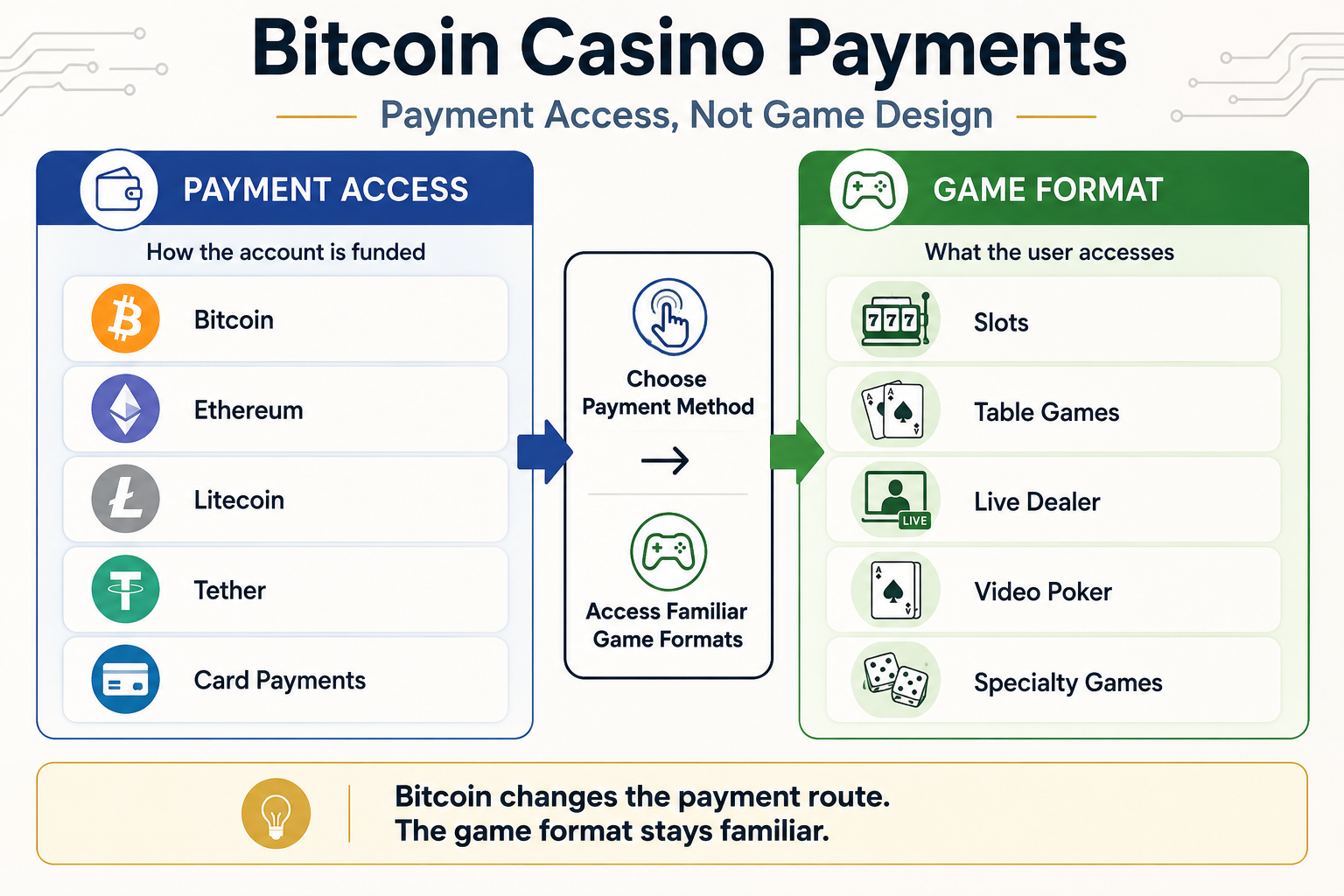
The simplest way to read the phrase is to split it into two parts: Bitcoin describes the payment layer, while casino describes the entertainment environment. In that sense, the Cafe Casino online entertainment platform works as a clear example because the site presents familiar casino formats, such as slots, blackjack, roulette, live dealer titles, table games, specialty games, and video poker, alongside payment options that include Bitcoin, Ethereum, Bitcoin Cash, Litecoin, Tether, Mastercard, and Visa.
Bitcoin is one route into the account, not a claim that every title is built on-chain or that the casino format has been redesigned around crypto. A reader looking at Cafe Casino online can treat the payment step and the game step as separate decisions: first, which method fits the account funding process, and then which type of game format they want to access. The phrase becomes less vague once those two layers stop competing for the same meaning.
It’s also possible to see this in Cafe Casino’s social media pages—such as this post, which covers Bitcoin, Ethereum, Bitcoin Cash, Litecoin, Tether, Mastercard, and Visa. The point is not that one method replaces all others. It is that an online casino payment page can present crypto and card choices together, while the entertainment side remains recognizable.
Why Bitcoin Casino Searches Get Misread
The phrase “Bitcoin casino” carries more weight than it should. Some readers use it to find a place that accepts Bitcoin. Others expect crypto-first branding, special games, or a platform where the coin defines the whole experience. Search results often blur that line by using broad labels instead of explaining which part of the user journey Bitcoin actually touches.
A better reading is practical. Bitcoin affects the account funding route: choosing a coin, sending funds from a wallet, and waiting for network confirmation. Those details belong to the payment layer. The game layer is separate. Blackjack is still judged by blackjack rules. Slots are still understood through reels, paylines, symbols, bonus rounds, volatility, and theme. Live dealer play is still about streamed presentation and human-run play.
That separation helps crypto readers avoid a category error. A payment method can be modern without making the whole product technically new. Cards, e-wallets, and crypto can all serve the same basic purpose at the account level. What changes is the rail, the asset, and the process before entertainment begins.
The Search Term Is Really About User Control
Bitcoin became a powerful search modifier because it signals choice. A reader typing “Bitcoin casino payments” is not always asking for a lesson in game design. They may want to know whether Bitcoin is accepted, whether other coins are available, whether stablecoins appear beside older crypto assets, and whether traditional cards remain an option.
That is where the payment page becomes useful as a signal. If a site lists Bitcoin alone, the experience reads differently from one that also includes Ethereum, Litecoin, Bitcoin Cash, Tether, Mastercard, and Visa. The broader set tells the reader that payment choice is not a single-track experience. It also makes the word “Bitcoin” easier to interpret as shorthand rather than a full description.
Tether adds another layer to that reading. For some users, a dollar-linked crypto asset is easier to understand at the payment stage than an asset with a constantly moving market price. That does not make it universally better. It shows why payment pages need plain language. People are not only comparing coins. They are comparing how clear each option feels when they choose it.
What Readers Should Look For
The best way to decode a Bitcoin casino search is to ask what the word Bitcoin is doing in the sentence. If it points to deposits, focus on supported assets, payment steps, confirmation expectations, and familiar alternatives. If it points to games, the page should explain what is actually different about the format.
For crypto readers tracking payments, that distinction is useful beyond casino searches. It applies whenever a digital asset moves from speculation talk into ordinary payment settings. The practical test is simply whether the payment moment is clear enough to understand what is being selected, what remains familiar, and what changes before the transaction is complete. Cryptocurrency adoption depends on more than awareness alone; usefulness and ease of use still shape acceptance, as shown in this open-access study on cryptocurrency awareness, acceptance, and adoption.
◆ Build with us
Every event, verified and scored. One API call away.