Using a Crypto Casino as Your Wallet in 2026: Weighing the Real Pros and Cons

You deposit some crypto for a quick session, watch the balance tick up in seconds, and for a moment everything feels effortless. Then a thought creeps in. Who actually controls this money right now? That question doesn't go away just because the interface is slick.
The idea of using a crypto casino as your actual wallet, not just a place to play but somewhere your funds genuinely live, has picked up real traction by 2026. Speed, on-chain transparency, features that feel tailor-made for anyone already comfortable navigating crypto day to day. All of that pulls people in. But every so often a headline breaks about a hack or a new regulation lands, and the whole conversation gets a reality check. Convenience and control aren't always the same thing. Sometimes they're flat-out opposites.
People who've spent real time in both gaming and crypto circles have watched these two worlds crash into each other more and more. It makes sense, really. When speed matters more than waiting on a bank transfer that takes three business days for no good reason, the appeal writes itself. So does the risk profile, once you look closely enough. Below is the honest breakdown, the good and the genuinely concerning, laid out so you can decide where a crypto casino balance fits into your own financial picture.
The Case For Using a Crypto Casino as a Wallet
Speed that traditional banking simply cannot match. Crypto casinos function as transactional hubs where deposits and withdrawals happen directly on the blockchain. What used to feel like separate, clunky steps now blends into one continuous motion. Load supported cryptocurrencies, play a few hands, cash out through the same rails, often with confirmations fast enough to make traditional payment systems look prehistoric by comparison.
Platforms like Razed crypto casino show this well and stand out as one of the fastest-growing Bitcoin casinos in 2025. Integrated wallet features let users manage balances without jumping through hoops, supporting multiple cryptocurrencies with near-instant updates so the focus stays on the game rather than logistics. Razed also makes it easier for non-crypto users to get started by allowing fiat purchases directly into crypto balances, while emphasizing eco-friendly practices in its operations. That combination of accessibility, speed, and responsible design resonates with crypto enthusiasts who juggle wallets daily and with gamers who expect things to just work.
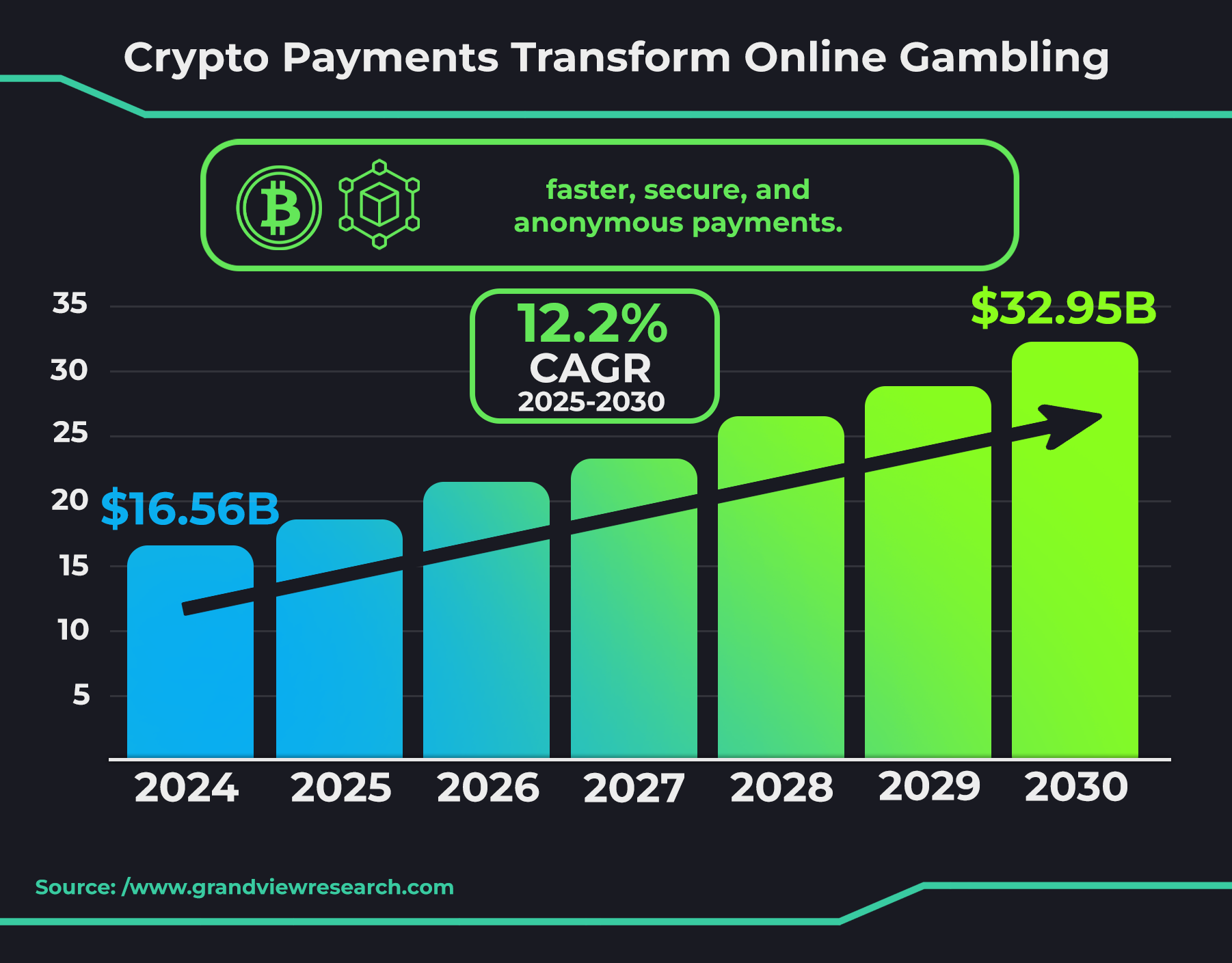
The market numbers back this up. Cryptocurrency adoption in online gambling gets described as transformative, and that's not just marketing fluff. North America's online gambling market sat around USD 16.56 billion in 2024, projected to grow at a 12.2% CAGR through 2030 toward USD 32.95 billion, with blockchain payments cited as a key driver. Globally, the sector is expected to reach USD 153.57 billion by 2030 at an 11.9% CAGR from 2025.
Transparency you can actually verify. Many crypto casino environments lean on provably fair mechanics, letting you verify game outcomes through cryptographic methods rather than trusting the operator blindly. You can check results independently after the fact, a layer of transparency traditional online gambling rarely offers.
Privacy without excessive data trails. Crypto payments cut down on how much personal banking information you hand over, which matters in regions with inconsistent oversight, or simply for users who'd rather not leave a long data trail. Bloomberg's reporting on major platforms captures this well, describing users loading wallets, playing, and cashing out directly via blockchain with rapid withdrawals and support for fairly substantial bets.
Better odds, in a lot of cases. Experts discussing Web3 gaming often point out that crypto-native platforms tend to deliver higher effective returns, commonly cited in the 97 to 99% RTP range versus around 94% in traditional settings, alongside faster innovation cycles and provably fair systems that build verifiable trust.

The Case Against Using a Crypto Casino as a Wallet
Custodial platforms make attractive targets, plain and simple, especially at less reliable or unlicensed operations. Centralized services holding user funds keep drawing sophisticated attacks. Chainalysis reported over USD 2.17 billion stolen from cryptocurrency services in the first half of 2025 alone, with full-year projections suggesting the total could surpass USD 4 billion. One incident, the ByBit breach, accounted for roughly USD 1.5 billion, about 69% of all service-related thefts that period.
Limited token support creates extra friction at many platforms. While leading operators accept a wide range of cryptocurrencies, plenty of smaller or less mature casinos still cap out at Bitcoin, Ethereum, and a handful of major stablecoins. Holders of less common assets often face mandatory conversions, extra fees, or outright rejection, turning what should be a simple deposit into multiple steps and added costs. That lack of flexibility stands in sharp contrast to platforms that have built broader multi-coin support from the start.
Customer service and licensing quality vary dramatically. On reliable, properly licensed sites, disputes get resolved and questions answered in reasonable timeframes. On others, support tickets go unanswered for days or weeks, especially during high-volume periods or after technical issues. Licensing can be murky or nonexistent at smaller operators, leaving users with little real recourse if funds are frozen, withdrawals delayed, or problems arise. The difference between a well-regulated platform and one operating in regulatory gray areas often only becomes obvious after something goes wrong.
Real examples make this less abstract. In 2023, a well-known crypto casino and sportsbook was hit with an exploit tied to a leaked private key on hot wallets, with reports citing around USD 16 million moved on Ethereum and broader impacts near USD 40 million across chains. The platform paused, investigated, and eventually resumed. Not an isolated case either. Private key compromises made up the largest share of stolen crypto in 2024, at 43.8%, according to Chainalysis, a statistic that says plenty about how much control shifts away from individuals once funds sit on platform-managed infrastructure.
You don't hold the keys, which means you don't hold full control. When funds live on a platform, you're interacting through the operator's systems rather than holding your own private keys. Convenient, sure, but it means leaning on the platform's security practices, governance, and solvency, something that becomes riskier with unlicensed or poorly supported casinos.
Governance failures happen too, not just external hacks. One crypto casino founder reportedly misappropriated at least USD 3.67 million of investor and company funds from a seed round exceeding USD 7 million, funneling the money into leveraged trades before resigning. A reminder that risk here isn't only about hackers, it's also about who's running the show, particularly at less transparent operators.
The structural gap versus real custody solutions. Transactional platforms are built for velocity and integration, not the audited segregation, multi-layered controls, and regulatory pathways qualified custodians build for longer-term asset protection. That's exactly why experienced holders keep the bulk of their assets in self-custody or offline setups, reserving platform environments for shorter, targeted activity. Gambling-related flows have also appeared in laundering contexts, with reports noting casino-linked e-wallets used to obscure trails, further reinforcing why a platform balance shouldn't double as a primary long-term wallet, especially at unreliable sites that may lack proper licensing or customer support.

Finding the Balance Between Convenience and Control
Thoughtful users tend to land on a layered approach. Keep smaller, active balances on trusted integrated platforms where speed and features actually get used for gaming or quick transactions. Keep larger or long-term holdings in offline wallets or properly qualified custody setups. This limits overall exposure without giving up on convenience entirely.
Chainalysis guidance on reducing drainer and phishing risks backs this up, suggesting users move only the funds they need into connected environments, and only when an activity calls for it. Similar logic to keeping daily spending money in a checking account while savings sit somewhere less exposed. Nothing revolutionary, just good hygiene applied to a newer kind of money.
Regulatory shifts keep influencing these decisions too. Outdated banking rules in various jurisdictions still throw friction into crypto flows even as broader frameworks slowly catch up. For deeper context on how these rules are evolving, check this CoinMarketCal breakdown of banking rules and crypto custody. Keeping an eye on these developments helps users get ahead of changes to platform operations and custody expectations, rather than getting blindsided by them.
Curious to see how these shifts are playing out in real time? This breakdown of Web3 gaming trends and custody considerations is worth a watch, especially for anyone still deciding how much of their balance belongs on-platform versus off.
Regulatory Shifts Shape the Road Ahead
Custody and platform rules remain very much in motion globally. Discussions around qualified custodians keep circling back to robust segregation, regular audits, and compliance structures that transactional gaming platforms usually aren't built to replicate at an institutional scale.
Responsible practice extends past security measures too. For those interested in sustainable, ethical approaches within fast-moving sectors like this one, resources such as GreenSmith Consulting offer useful perspective on aligning business values with long-term success.
As these frameworks mature, users get clearer signals about what counts as prudent practice. Keeping tabs on events through calendars like CoinMarketCal can help surface upcoming regulatory milestones, platform updates, or security developments that might affect how integrated wallets function down the line.
Online gambling and crypto-integrated platforms generate real engagement and revenue, but they carry real risk too. Financial loss is possible, whether through volatility in crypto values or game outcomes not going your way. Approach with clear limits in mind, understand the difference between active liquidity you can afford to risk and core holdings you genuinely can't, and seek professional guidance if needed.
The Bottom Line for 2026 and Beyond
The trade-off hasn't really changed, even as the technology around it keeps improving. Integrated crypto casino environments deliver speed, transparency, and accessibility that genuinely enhance active use, while custody realities and outside threats still demand a deliberate strategy. Layering your approach, using platforms for what they're actually good at while protecting longer-term assets elsewhere, offers a practical path for most people navigating this space.
Staying ahead means tracking wallet trends, regulatory shifts, and security incidents as they unfold, not after the fact. Weigh both the advantages and the well-documented risks side by side, and you'll be in a solid position to decide whether a crypto casino deserves a spot in your wallet strategy, or just a spot on your screen for an hour or two.
◆ Build with us
Every event, verified and scored. One API call away.